
Stretch marks are extremely common and can appear during pregnancy, puberty, rapid weight gain or weight loss, muscle growth and other periods when the skin stretches quickly.
For many women, stretch marks become particularly noticeable during and after pregnancy, especially on the abdomen, breasts, hips, thighs and buttocks.
The good news is that stretch marks can often be made less noticeable with the right dermatological treatment.
At Nyra Skin & Hair Clinic, Balewadi, Pune, Dr. Paulomi Vartak, MD Dermatology, evaluates the type, age, colour and depth of stretch marks before recommending an appropriate treatment plan.
The goal is not to promise complete removal, but to improve the appearance, texture and overall blending of stretch marks with the surrounding skin.
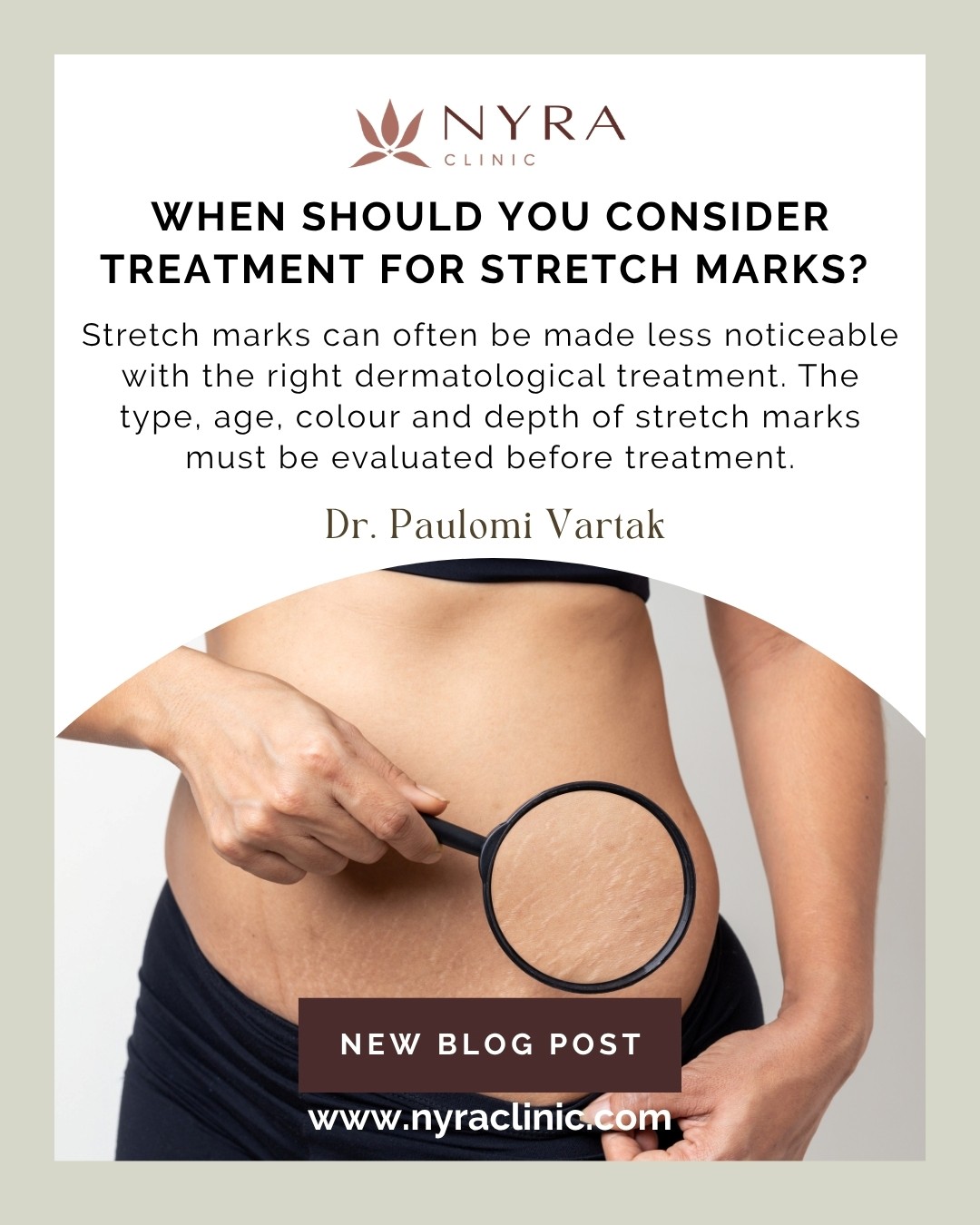
Stretch marks, medically known as striae, are a type of scar that develops when the skin stretches or shrinks relatively quickly.
Rapid stretching can cause changes in the deeper connective tissue of the skin, leading to visible linear marks. They may initially appear pink, red, purple or darker than the surrounding skin and may gradually become lighter or whitish with time.
They commonly appear on:
- Abdomen
- Hips
- Thighs
- Buttocks
- Breasts
- Upper arms
- Lower back
Although stretch marks are harmless in most people, they can become a cosmetic concern, particularly when they are prominent or extensive.
Stretch marks can develop when the skin undergoes rapid expansion or contraction.
Common situations include:
- Pregnancy
- Rapid weight gain
- Rapid weight loss
- Puberty and growth spurts
- Muscle growth or bodybuilding
- Obesity or overweight
- Certain hormonal conditions
- Prolonged use of corticosteroid medications in some cases
Genetics can also influence how easily a person develops stretch marks.
Pregnancy is one of the most common times for stretch marks to develop.
As the abdomen grows, the skin stretches progressively. Stretch marks can also appear on the breasts, thighs and hips. Pregnancy-related stretch marks are commonly called striae gravidarum.
Some women develop only a few marks, while others develop extensive stretch marks.
It is important to understand that developing stretch marks during pregnancy is not a sign that you have done something wrong. They are a common skin change associated with pregnancy.
There is no guaranteed method to completely prevent stretch marks.
Maintaining healthy pregnancy weight gain according to your obstetrician’s advice, keeping the skin moisturised and maintaining general skin health may be sensible, but moisturisers should not be presented as a guaranteed way to prevent stretch marks.
During pregnancy, cosmetic procedures such as lasers, microneedling or other energy-based treatments should not be undertaken without appropriate medical advice.
A dermatologist can guide you about what skincare is appropriate during pregnancy and when treatment can safely be considered.
When should you consider treatment?
You may consider dermatological treatment if:
- Stretch marks are extensive or prominent
- They are affecting your confidence
- They remain noticeable after pregnancy
- You have stretch marks after significant weight change
- They have developed after rapid muscle growth
- You want to improve their texture and appearance
Treatment is generally considered for cosmetic reasons because stretch marks are usually not medically harmful.
Does every stretch mark require treatment?
No.
Stretch marks are harmless in most cases and do not require medical treatment.
Some gradually become less noticeable with time. However, if they remain a cosmetic concern, dermatological procedures can be considered.
The choice of treatment depends on whether the marks are relatively new and coloured or older and white, along with their depth, location, skin type and overall skin condition.
There is no single treatment that works equally well for every stretch mark.
A dermatologist may recommend one treatment or a combination of procedures depending on the individual case.
- Microneedling
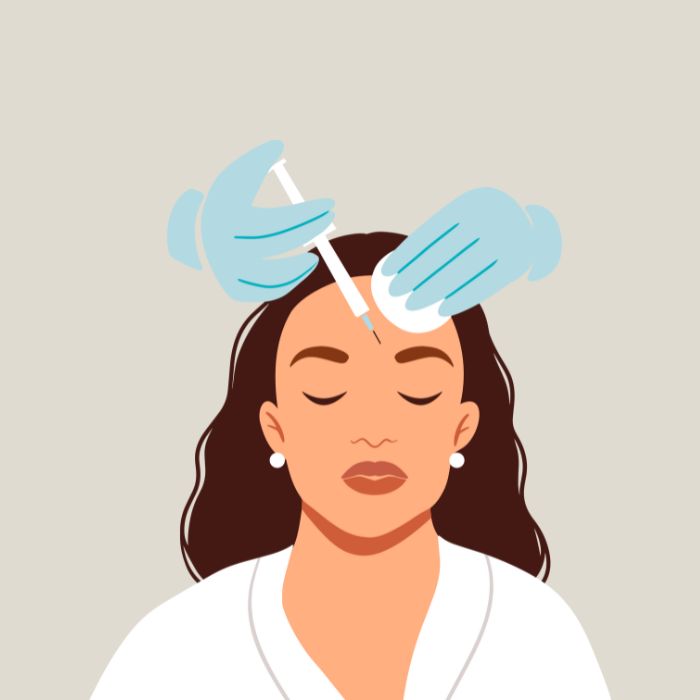
Microneedling uses very fine needles to create controlled micro-injuries in the skin.
This stimulates the skin’s natural healing response and collagen production.
Over a series of sessions, microneedling may help improve the texture and appearance of stretch marks. The American Academy of Dermatology recognises microneedling as a treatment that can help fade stretch marks.
Microneedling may be particularly useful when the main concern is uneven skin texture.
The number of sessions varies from person to person.
- Laser treatment
Laser-based treatments can be considered for selected stretch marks.
Different laser technologies work in different ways. Some target redness and blood vessels in newer stretch marks, while fractional laser approaches can stimulate collagen remodelling and improve skin texture.
The appropriate laser depends on factors such as:
- Colour of the stretch marks
- Age of the stretch marks
- Skin type
- Body location
- Degree of textural change
Laser treatment should therefore be selected by a dermatologist rather than choosing a device simply because it is advertised as a “stretch mark removal laser.”
- PRP therapy
Platelet-rich plasma, or PRP, uses a concentrated portion of the patient’s own blood.
A small quantity of blood is collected and processed to obtain platelet-rich plasma, which can then be used as part of a dermatological treatment plan.
PRP may be combined with microneedling in selected patients to support collagen-related skin remodelling. The American Academy of Dermatology describes microneedling with PRP as a combination used to enhance collagen-related treatment in dermatology.
Whether PRP is appropriate for stretch marks depends on the individual patient and the dermatologist’s assessment.
- Combination treatments
Sometimes, combining procedures may provide a better approach than relying on one treatment alone.
Depending on the case, a dermatologist may consider combinations such as:
- Microneedling + PRP
- Microneedling + other collagen-stimulating treatments
- Laser + other dermatological procedures
The exact combination should be personalised according to the patient’s skin and the characteristics of the stretch marks.
There is no universal “best” treatment.
Newer red or purple stretch marks may respond differently from older white stretch marks.
For example, a dermatologist may consider vascular-targeting approaches for redness, while collagen-remodelling procedures may be more appropriate when the main concern is textural change.
Your skin type also matters.
This is particularly important for Indian skin, where inappropriate use of certain energy-based treatments can increase the risk of pigmentation changes.
A consultation with a dermatologist helps determine the safest and most appropriate treatment approach.
Complete removal cannot be guaranteed.
Stretch marks are a type of scar, and treatment is generally aimed at making them less visible rather than erasing them completely.
With appropriate treatment, the colour, texture, width and overall visibility may improve.
Results also vary according to the age and severity of the stretch marks and the individual’s response to treatment.
In many cases, newer stretch marks that are still red, pink or purple may be more responsive to treatment than mature white stretch marks.
However, older stretch marks can also be treated to improve their appearance.
A dermatologist can assess the stage of the stretch marks and recommend an appropriate treatment strategy.
Treatment timing should be individualised.
After delivery, the skin and body continue to undergo changes. If you are breastfeeding, your medications, skincare products and procedures should also be reviewed with your dermatologist.
Procedures such as microneedling, PRP or laser treatment should be started only after a dermatologist has assessed you and determined that the timing is appropriate.
There is no need to rush into treatment immediately after childbirth.
Yes.
Stretch marks can occur after significant or rapid changes in body size.
They may become more noticeable after weight loss because the underlying skin changes remain even after the body volume decreases.
If stretch marks are bothering you after weight loss, a dermatologist can assess whether procedures such as microneedling, laser treatment or combination therapy may help improve their appearance.
You may be a candidate if:
- You are bothered by visible stretch marks
- Your stretch marks have remained noticeable over time
- You have completed pregnancy and are considering cosmetic treatment
- You developed stretch marks after weight gain or weight loss
- You have stretch marks related to growth or muscle building
- You are medically suitable for the proposed procedure
The first step is a dermatological consultation rather than directly choosing a procedure.
Stretch mark treatment is not simply about selecting a laser or microneedling device.
The dermatologist needs to assess:
- Type of stretch mark
- Age of the stretch mark
- Colour
- Depth and texture
- Skin type
- Previous treatments
- Pregnancy or breastfeeding status
- History of pigmentation or scarring
- Expectations from treatment
A personalised approach is especially important for Indian skin because treatment settings and technology need to be selected carefully.
At Nyra Skin & Hair Clinic, Balewadi, Dr. Paulomi Vartak, MD Dermatology, can assess your stretch marks and recommend an appropriate treatment plan based on your skin and individual concerns.
1. What is the best treatment for stretch marks?
There is no single best treatment for everyone. Depending on the type and age of the stretch marks, options may include microneedling, laser-based treatments, PRP and combination procedures.
2. Can stretch marks after pregnancy be treated?
Yes. Pregnancy-related stretch marks can be treated after pregnancy when appropriate. A dermatologist can determine which procedure is suitable based on their appearance and your skin type.
3. Can I get laser treatment for stretch marks?
Laser treatment may help improve the appearance of selected stretch marks. The appropriate laser depends on whether the marks are red, purple, white or primarily associated with textural changes.
4. Is microneedling effective for stretch marks?
Microneedling can help make stretch marks less noticeable by stimulating collagen production and improving skin texture. Multiple sessions may be required.
5. Can PRP be used for stretch marks?
PRP may be used as part of a personalised treatment plan and may be combined with microneedling. Whether it is appropriate depends on the individual case.
6. Are stretch marks permanent?
Stretch marks often fade and become less noticeable with time, but they may not disappear completely. Treatments can improve their appearance but cannot guarantee complete removal.
7. Can I treat stretch marks while pregnant?
Cosmetic procedures such as laser, microneedling and PRP should not be started during pregnancy without medical advice. Pregnancy-safe skincare and appropriate timing of future treatment should be discussed with your dermatologist.
8. When should I start treating pregnancy stretch marks?
There is no need to rush into procedures during pregnancy. After delivery, a dermatologist can assess the skin and recommend the appropriate timing and treatment.
9. Are stretch mark creams enough?
Moisturisers can help keep the skin hydrated and comfortable, but they should not be expected to completely remove established stretch marks. Established stretch marks may require procedural treatment if you want to reduce their visibility.
10. How many sessions will I need?
The number of sessions varies according to the type, age and severity of the stretch marks and the treatment selected. Your dermatologist can provide a more personalised estimate after examination.
11. Is stretch mark treatment safe for Indian skin?
Many dermatological procedures can be performed safely on Indian skin when appropriately selected and performed with suitable settings. However, the risk of post-inflammatory pigmentation means that treatment should be individualised by an experienced dermatologist.
12. Can stretch marks be completely removed with laser?
No treatment can guarantee complete removal. Laser treatment is intended to improve the appearance of stretch marks, not promise that they will disappear completely.
At Nyra Skin & Hair Clinic, Balewadi, Pune, Dr. Paulomi Vartak, MD Dermatology, can evaluate your skin and recommend a personalised approach that may include microneedling, laser-based treatments, PRP or combination procedures where appropriate.
The aim is realistic improvement, personalised treatment and safe dermatological care.
Book a consultation to understand which stretch mark treatment is appropriate for your skin.
Get In Touch
Whether it’s skin health, aesthetic treatments, or expert gynecological care, our team is dedicated to providing personalized solutions with expertise and empathy. Get in touch with us today to experience the best in skin and women’s health care.
Our Team

Dr. Paulomi Vartak
Lead Dermatologist
MD Dermatology, Fellowship (Aesthetic Dermatology- CUTIS, Bangalore)

Dr. Priyadarshini Vartak
MD Obstetrics & Gynaecology,
MRCOG (London)
Our Philosophy

Lotus
Holistic Care With empathy

Butterfly
Transformation With trusted care

Sparkle
Excellence Through innovation


Our Treatments
Your Journey To Radiant Skin Begins Here
Our treatment process is designed to ensure your comfort and satisfaction. From your initial consultation to your follow-up care, we prioritize your needs every step of the way.

Step 1: Initial Consultation and Assessment

Step 2: Personalized Treatment Plan Creation
Step 3: Treatment Implementation and Care