
Dark circles are one of the most common cosmetic concerns among both men and women. They can make you appear tired, stressed, older, or unhealthy—even when you are perfectly fine.
Many people spend months or even years trying expensive creams, home remedies, or internet hacks, only to see little or no improvement.
The reason is simple.
Dark circles are not a single disease. They have multiple causes, and the right treatment depends entirely on identifying the actual reason behind them.
At Nyra Clinic, Balewadi, Pune, Dr. Paulomi Vartak believes that successful dark eye circle treatment begins with an accurate diagnosis rather than blindly applying creams.
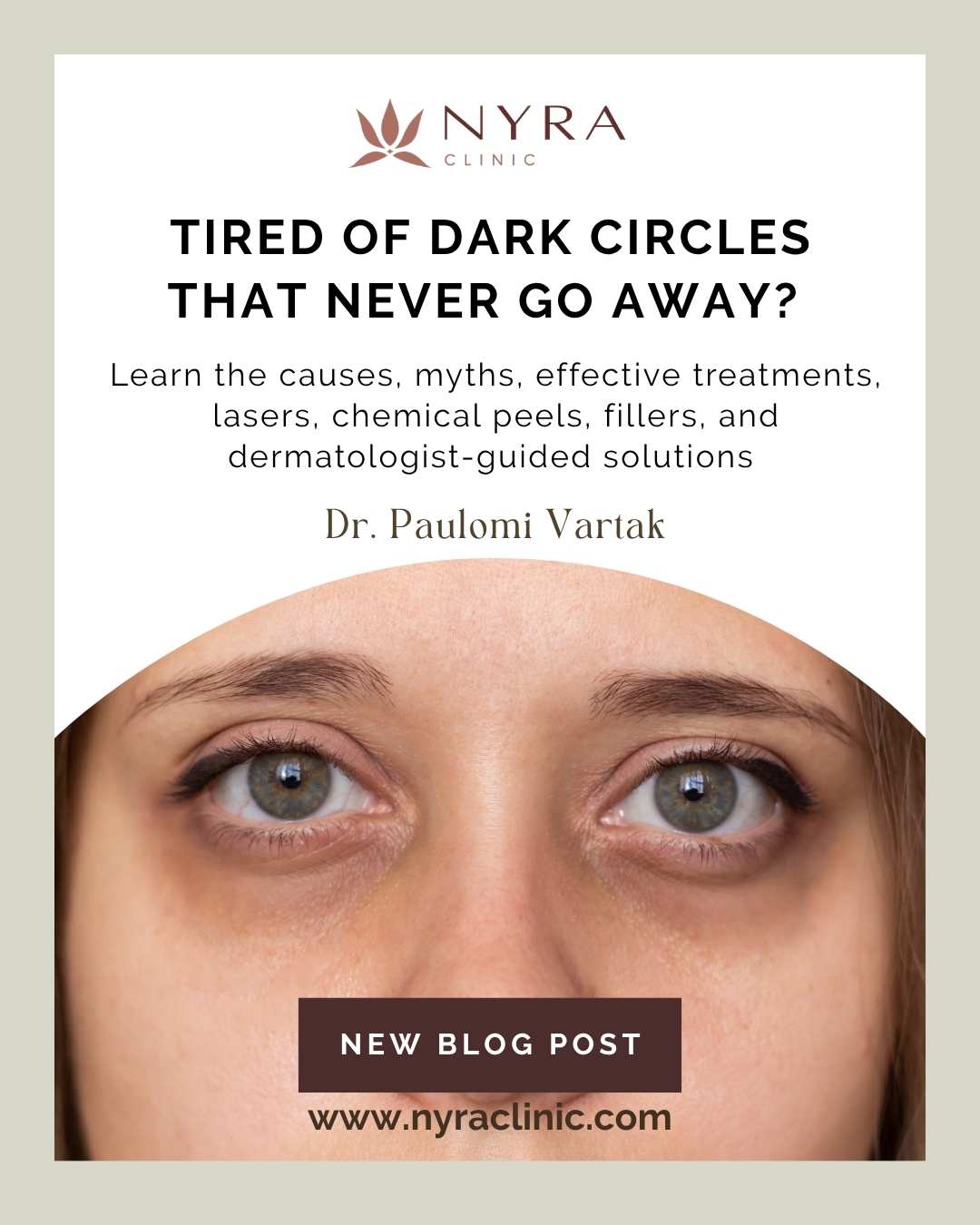
Dark eye circles, medically known as periorbital hyperpigmentation, refer to darkening or discoloration of the skin beneath the eyes. Sometimes they appear brown, black, blue, purple, or even hollow depending on the underlying cause.
Not every dark circle looks the same because not every dark circle has the same cause.
This is why one person’s treatment may not work for another.
Several factors can contribute to dark circles.
Genetics
Some people naturally have thinner skin or increased pigmentation around the eyes because of hereditary factors.
If your parents have dark circles, you may also develop them despite maintaining a healthy lifestyle.
Lack of Sleep
Poor sleep can make blood vessels more visible beneath the delicate under-eye skin, making the area appear darker.
However, sleep deprivation is only one of many causes—not the only cause.
Excess Pigmentation
Melanin deposition around the eyes is common in Indian skin and may occur due to genetics, sun exposure, inflammation, or frequent rubbing.
Thin Under Eye Skin
As we age, collagen decreases, making the skin thinner.
The underlying muscles and blood vessels become more visible, creating a bluish or dark appearance.
Allergies
Frequent eye rubbing due to allergies can worsen pigmentation and skin irritation.
Sun Exposure
UV radiation stimulates melanin production and can significantly worsen existing pigmentation.
Ageing
Loss of fat, collagen, and skin elasticity causes hollowness beneath the eyes, creating shadows that resemble dark circles.
Lifestyle Factors
Smoking
Stress
Poor hydration
Nutritional deficiencies
Excessive screen time
Irregular sleep
All these factors may contribute to worsening the appearance.
Medical Conditions
Sometimes dark circles may be associated with:
- Iron deficiency
- Thyroid disorders
- Chronic allergies
- Eczema
- Atopic dermatitis
- Certain medications
A dermatologist may recommend investigations if required.
Understanding the type of dark circle is the first step toward successful treatment.
Pigmented Dark Circles
These appear brown or black due to excess melanin.
Vascular Dark Circles
These appear bluish, purple, or pink because blood vessels are visible beneath thin skin.
Structural Dark Circles
These occur due to hollow tear troughs or facial anatomy, creating shadows.
Mixed Type
Most patients actually have a combination of pigmentation, vascular changes, and volume loss.
These patients usually require combination treatment.
Myth 1: Everyone Gets Dark Circles Due to Lack of Sleep
Fact: Many people sleep well and still have dark circles because of genetics or pigmentation.
Myth 2: Eye Cream Can Cure Every Dark Circle
Fact: Creams alone cannot correct hollowness, vascular changes, or hereditary pigmentation.
Myth 3: Home Remedies Remove Dark Circles Permanently
Fact: Cucumber slices, potato juice, tea bags, or almond oil may temporarily soothe the skin but usually cannot treat the underlying cause.
Myth 4: Dark Circles Are Always Due to Poor Health
Fact: Many healthy individuals have genetically determined dark circles.
Myth 5: One Treatment Works for Everyone
Fact: Dark circle treatment is highly individualized.
Many patients unintentionally worsen their dark circles.
Common mistakes include:
- Buying fairness creams without medical advice
- Using steroid-containing creams
- Expecting overnight improvement
- Ignoring sunscreen
- Frequently rubbing the eyes
- Trying multiple internet remedies simultaneously
- Self-treating without understanding the cause
- Using random cosmetic products recommended on social media
One of the biggest misconceptions is believing that expensive eye creams can completely eliminate dark circles.
Creams may help improve:
- Skin hydration
- Mild pigmentation
- Fine lines
- Skin barrier function
However, creams cannot:
- Fill hollow tear troughs
- Tighten significantly loose skin
- Remove deep pigmentation alone
- Correct prominent blood vessels
- Restore lost facial volume
This is why dermatologist-guided treatment often combines different modalities.
Modern cosmetic dermatology offers several effective options.
The best treatment depends entirely on the underlying diagnosis.
Medical Grade Skin Care
Customized topical medications may include ingredients such as:
- Vitamin C
- Retinoids
- Kojic acid
- Azelaic acid
- Niacinamide
- Caffeine
- Tranexamic acid
The dermatologist selects products based on your skin type and pigmentation pattern.
Chemical Peels
Chemical peels gently exfoliate pigmented skin and stimulate skin renewal.
Benefits include:
- Reduction in pigmentation
- Improved skin texture
- Brighter under-eye appearance
- Better absorption of skincare products
Multiple sessions may be required for optimal improvement.
Laser Treatments
Lasers can effectively target specific causes of dark circles.
Depending on the condition, lasers may help:
- Reduce pigmentation
- Stimulate collagen production
- Improve skin texture
- Enhance overall skin rejuvenation
Different laser technologies are used depending on the patient’s skin type and diagnosis.
Microneedling
Microneedling stimulates collagen production, making under-eye skin thicker and healthier.
It can improve:
- Fine wrinkles
- Mild pigmentation
- Skin texture
- Overall skin quality
Platelet Rich Plasma (PRP)
PRP uses the patient’s own platelets to stimulate tissue repair and collagen formation.
It is commonly used as part of combination therapy for selected patients.
Injectable Treatments
Patients with tear trough deformity or volume loss may benefit from carefully selected injectable treatments to reduce shadows and restore facial balance.
These procedures require expert evaluation because not every patient is a suitable candidate.
Combination Treatments
The best results are often achieved by combining:
- Medical skincare
- Chemical peels
- Lasers
- Microneedling
- Injectable treatments
- Lifestyle modifications
There is rarely a single treatment that works for every patient.
Dark circles may look similar but have completely different causes.
A dermatologist evaluates:
- Skin thickness
- Pigmentation type
- Blood vessel visibility
- Facial anatomy
- Age-related changes
- Lifestyle
- Medical history
- Allergies
- Previous treatments
Only after this assessment can an individualized treatment plan be prepared.
Treating every patient with the same cream or laser is unlikely to provide satisfactory results.
While professional treatment plays an important role, healthy habits also contribute to better outcomes.
These include:
- Sleeping adequately
- Wearing sunscreen daily
- Using sunglasses outdoors
- Avoiding excessive eye rubbing
- Staying hydrated
- Managing allergies
- Eating a balanced diet rich in iron and vitamins
- Quitting smoking
- Limiting prolonged screen exposure
- Following a dermatologist-prescribed skincare routine
Consider consulting a dermatologist if:
- Dark circles have been present for months or years.
- Creams have not helped.
- The pigmentation is increasing.
- You have under-eye hollowness.
- You frequently rub your eyes because of allergies.
- Dark circles affect your confidence.
- You notice associated pigmentation elsewhere on the face.
- You want scientifically proven cosmetic treatments.
Early evaluation helps avoid unnecessary spending on ineffective products.
Can dark circles be permanently removed?
The outcome depends on the underlying cause. Many patients experience significant improvement with the right combination of treatments, although maintenance may be required.
Which treatment is best for dark circles?
There is no single best treatment. The ideal option depends on whether the dark circles are caused by pigmentation, blood vessels, ageing, or facial anatomy.
Are chemical peels safe for the under-eye area?
When performed by an experienced dermatologist using appropriate formulations, chemical peels can be a safe and effective option for selected patients.
Do lasers work for dark circles?
Yes. Certain laser technologies can improve pigmentation, stimulate collagen production, and rejuvenate the under-eye area. Suitability depends on the type of dark circles.
How many sessions are required?
The number of sessions varies depending on scar size and response to treatment. Most patients require multiple visits for optimal outcomes.
Can eye creams alone remove dark circles?
Eye creams may improve hydration and mild pigmentation, but they are often insufficient for treating structural, vascular, or severe pigmented dark circles.
Are home remedies effective?
Home remedies may provide temporary soothing but generally do not address the root cause of persistent dark circles.
Is dark circle treatment painful?
Most procedures involve minimal discomfort. Depending on the treatment, topical numbing cream may be used to enhance comfort.
Can men also undergo dark circle treatment?
Yes. Dark circle treatments are suitable for both men and women after proper dermatological evaluation
How soon can I see results?
Results vary depending on the treatment modality. Some patients notice improvement within a few weeks, while others may require multiple sessions over several months.
Dark circles are much more complex than they appear. They may result from genetics, pigmentation, ageing, allergies, vascular changes, or lifestyle factors. This is why relying only on creams often leads to disappointing results.
Modern dermatology offers several effective treatment options, including medical skincare, chemical peels, laser treatments, microneedling, PRP, and injectable procedures. However, the key to successful treatment lies in identifying the exact cause before choosing the appropriate therapy.
If you are looking for dark eye circle treatment in Pune, consulting a qualified dermatologist can help you receive a personalized treatment plan that addresses the underlying cause rather than simply masking the problem.
Get In Touch
Whether it’s skin health, aesthetic treatments, or expert gynecological care, our team is dedicated to providing personalized solutions with expertise and empathy. Get in touch with us today to experience the best in skin and women’s health care.
Our Team

Dr. Paulomi Vartak
Lead Dermatologist
MD Dermatology, Fellowship (Aesthetic Dermatology- CUTIS, Bangalore)

Dr. Priyadarshini Vartak
MD Obstetrics & Gynaecology,
MRCOG (London)
Our Philosophy

Lotus
Holistic Care With empathy

Butterfly
Transformation With trusted care

Sparkle
Excellence Through innovation


Our Treatments




Your Journey To Radiant Skin Begins Here
Our treatment process is designed to ensure your comfort and satisfaction. From your initial consultation to your follow-up care, we prioritize your needs every step of the way.

Step 1: Initial Consultation and Assessment

Step 2: Personalized Treatment Plan Creation

Step 3: Treatment Implementation and Care